WATERJETS
HIGH PERFORMANCE WATERJET
PROPULSION SYSTEMS
Marine Jet Propulsion Systems
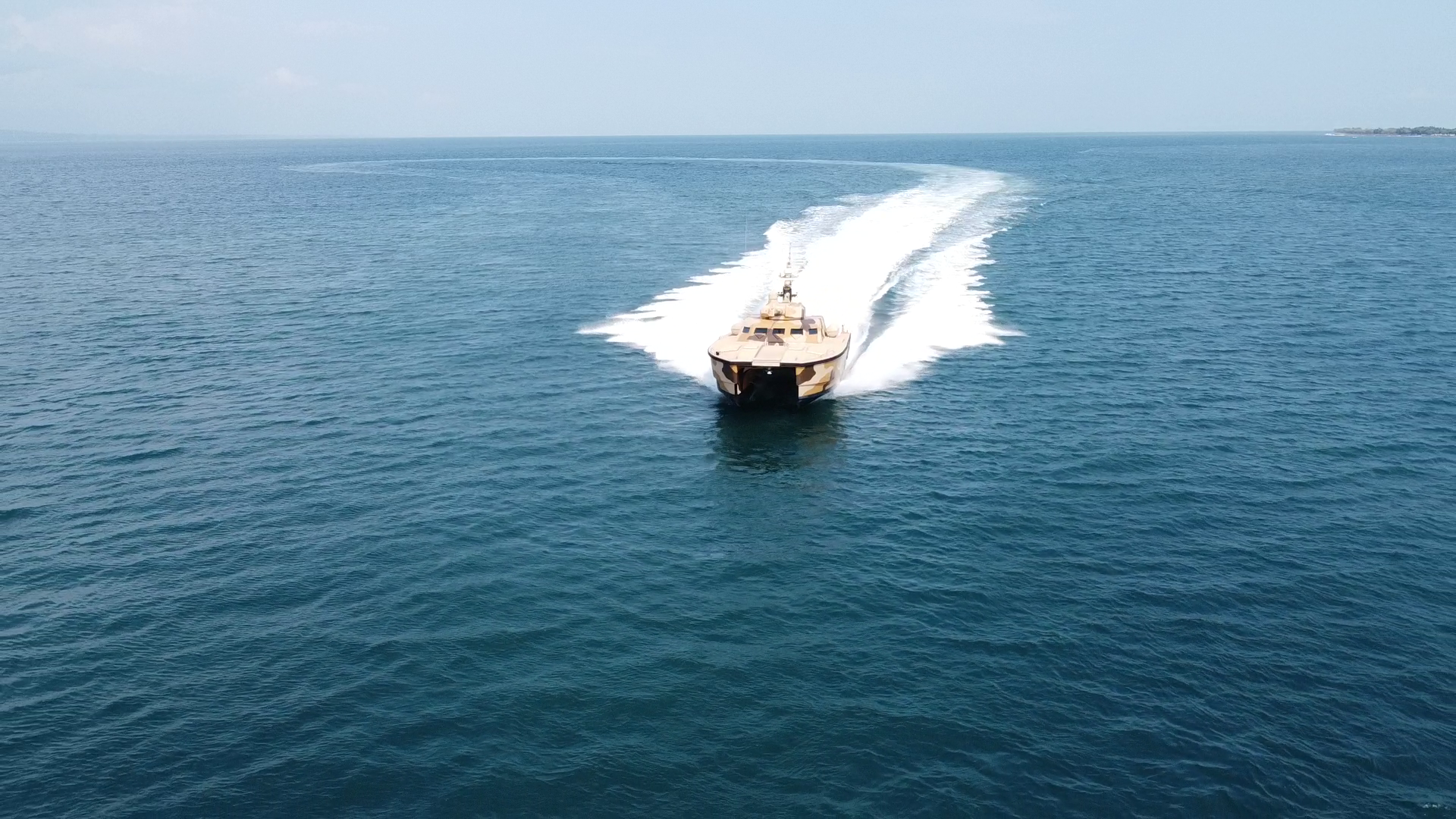
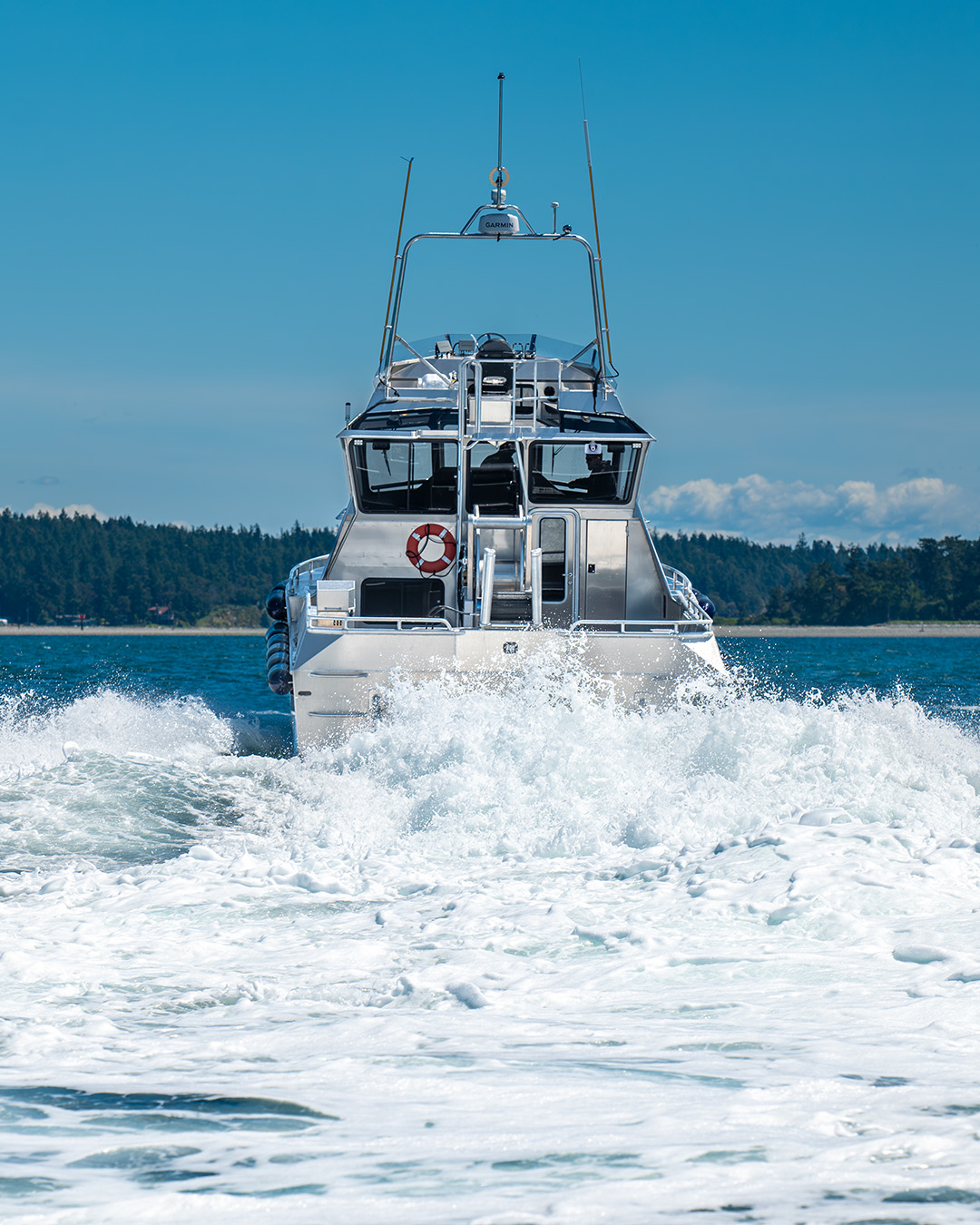
Marine Jet Power delivers advanced marine waterjet propulsion systems engineered for reliability, thrust, and exceptional maneuverability across all vessel sizes. From governmental and military craft to commercial workboats, high-speed passenger ferries, yachts, USVs and hybrid/electric vessels, our waterjets offer efficient, low-maintenance propulsion built for modern marine demands.
Whether you require mixed-flow or axial-flow waterjets, hybrid electric marine propulsion, or high-efficiency solutions for retrofits, we provide complete systems and global support throughout the vessel’s lifecycle.
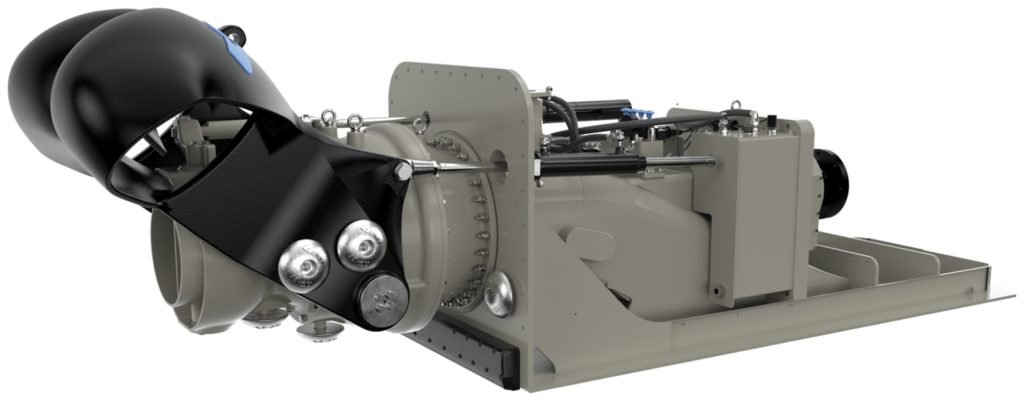
Max KW
Max BHP
611 – 2,070 kW
819 – 2,776 BHP
Materials
- Body
- Aluminum
- Pump Unit
- Duplex Stainless
- Intake
- Aluminum
For Vessels
12-40m

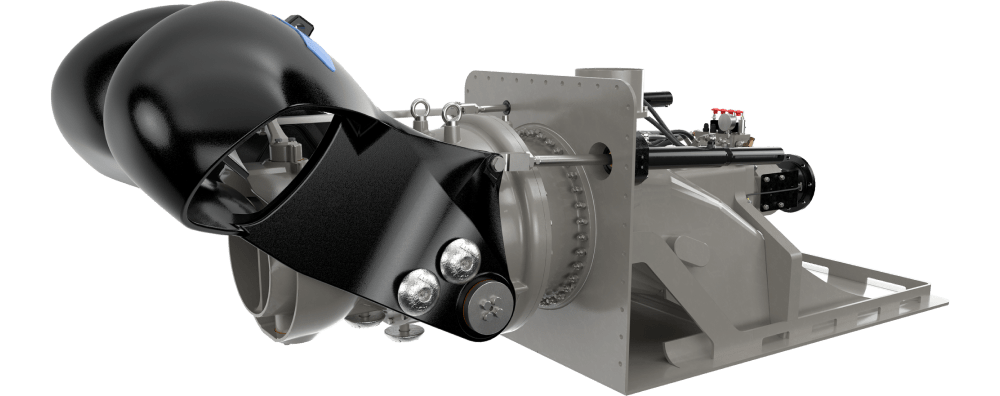
Max KW
Max BHP
830 – 1,030 kW
1,113 – 1,381 BHP
Materials
- Body
- Aluminum
- Pump Unit
- Duplex Stainless Steel
- Intake
- Aluminum
For Vessels
12-40m

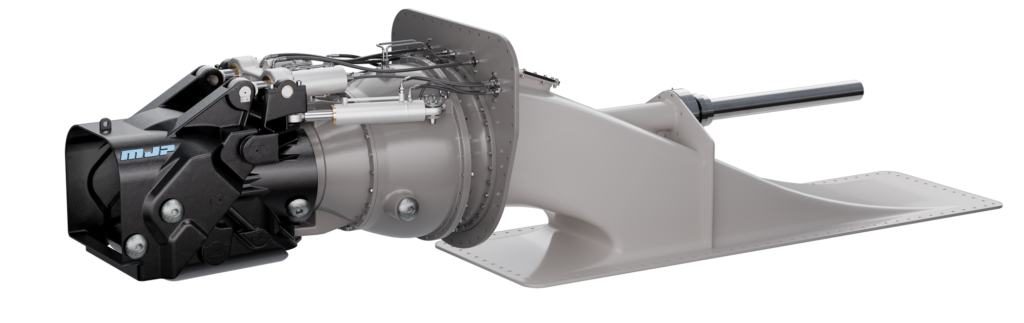
Max KW
Max BHP
2,500 – 24,000 kW
3,352 – 32,184 BHP
Materials
- Body
- Duplex Stainless Steel
- Pump Unit
- Duplex Stainless Steel
- Intake
- Metal or Composite
For Vessels
26-200m
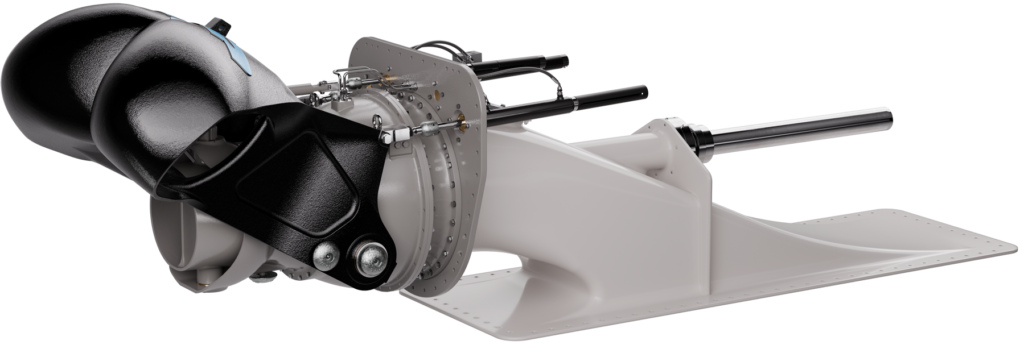
DRB – Double Reversing Bucket
Mixed Flow High-Efficiency Waterjet with Inboard Hydraulics
Explore DRBMax KW
Max BHP
1,250 – 6,000 kW
1,676 – 8,046 BHP
Materials
- Body
- Duplex Stainless Steel
- Pump Unit
- Duplex Stainless
- Intake
- Steel, Metal or Composite
For Vessels
26-200m
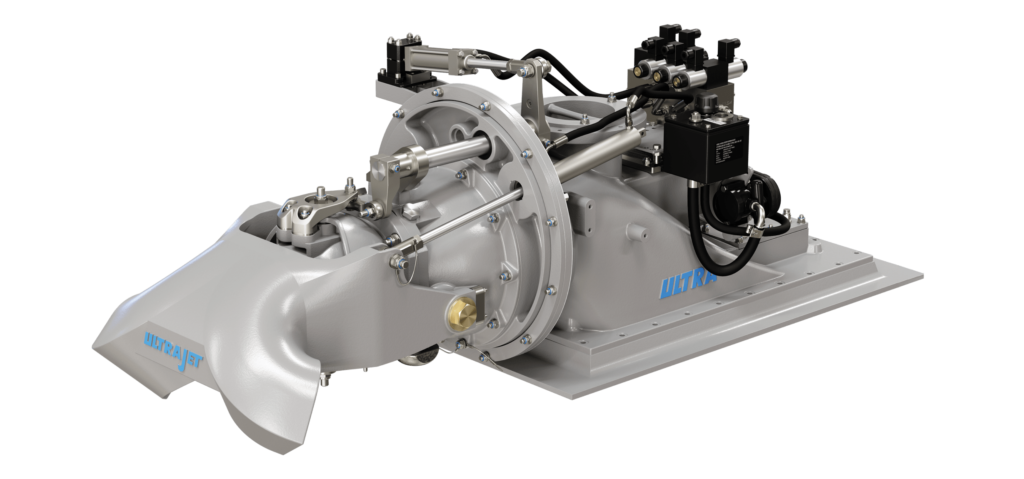
Max KW
Max BHP
336 – 448 kW
450 – 609 BHP
Materials
- Body
- Aluminum
- Pump Unit
- Aluminum
- Intake
- Aluminum
For Vessels
8-17m

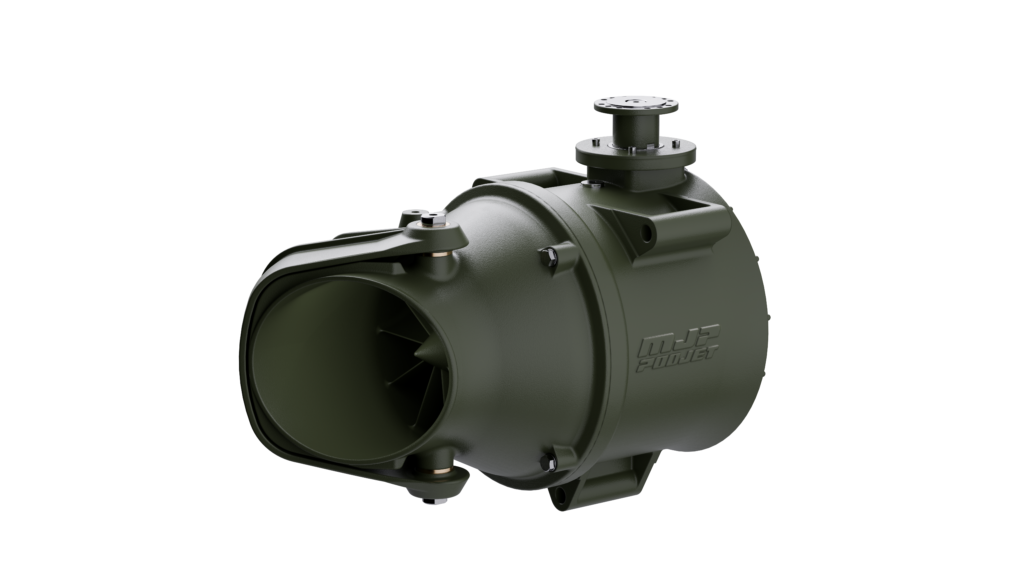
Max KW
Max BHP
110 kW
150 BHP
Materials
- Body
- Aluminum
- Pump Unit
- Aluminum
- Intake
- Aluminum
For Vessels
Amphibious
Why waterjets?
Waterjets offer a clear advantage over traditional propulsion systems – especially when control, efficiency, and safety matter most. Whether you’re navigating shallow waters, supporting offshore operations, or powering high-speed military vessels, waterjet propulsion delivers unmatched responsiveness and reliability.

SHALLOW WATER ACCESS
With no exposed propellers, waterjets allow vessels to operate closer to shore and in shallow environments with minimal risk of damage.

INSTANT THRUST & REVERSE
Achieve immediate acceleration and
deceleration, making tight maneuvers and
docking faster, safer, and easier.

INCREASED SAFETY
No external rotating parts means reduced
risk for divers, crew, and marine life.

LOW MAINTENANCE, HIGH UPTIME
Fewer moving parts and rugged design
translate to reduced wear and longer service
intervals.

FUEL EFFICIENCY
Efficient thrust at a range of speeds helps
reduce fuel consumption and emissions.

QUIET OPERATION
Minimized vibration and noise help
preserve acoustic discretion in sensitive or
tactical environments.
Waterjet Selector Tool
Not sure which waterjet is right for you? Try our Jet Selector Tool
How Does Waterjet
Propulsion Work?
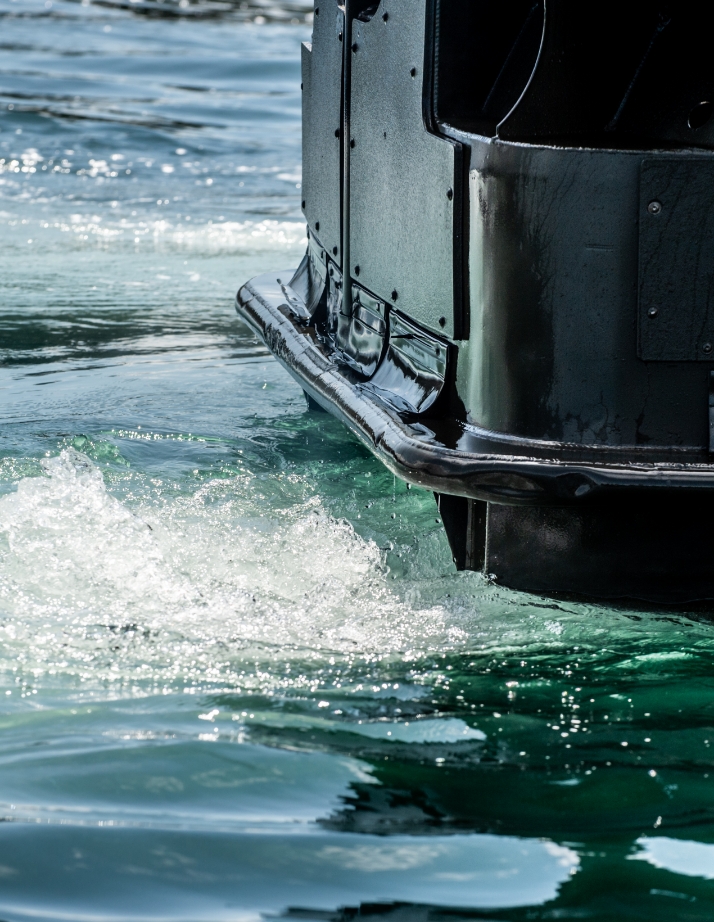
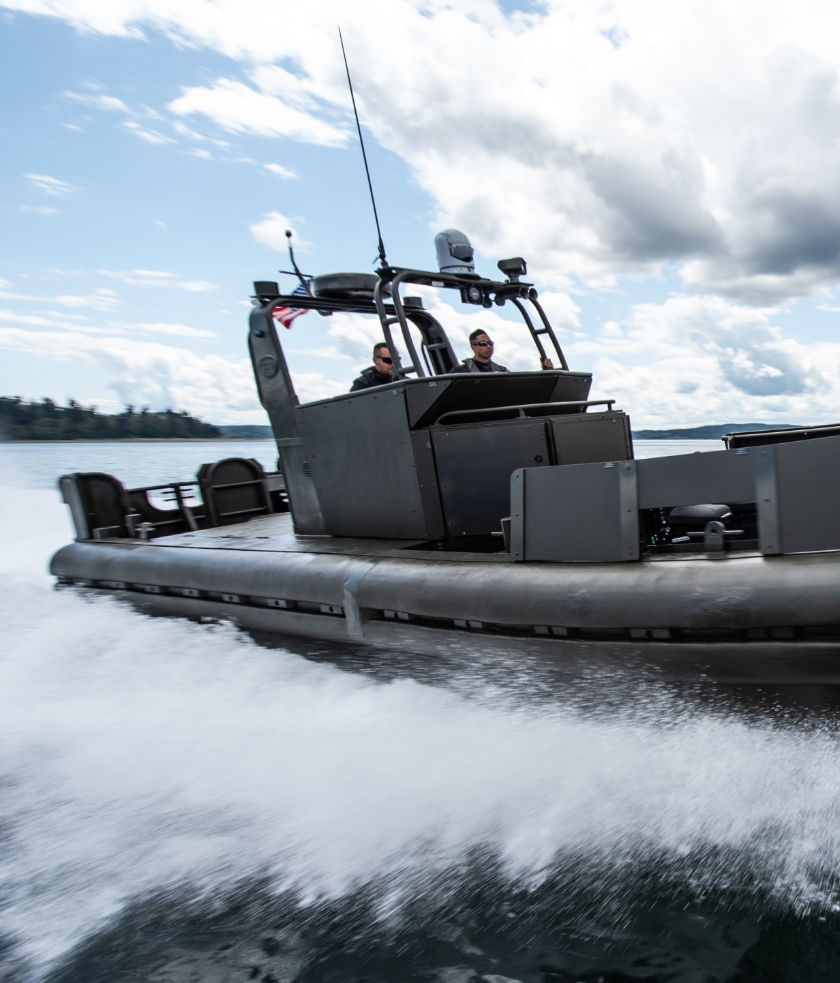
Waterjet propulsion works by drawing water through an intake beneath the hull, accelerating it with a pump, and expelling it through a nozzle to create thrust. Steering and reversing are achieved by redirecting the water stream – giving the operator full control at any speed.
Because all moving parts are enclosed within the hull, the system is safe, quiet, and low-maintenance. With no exposed propellers, the risk of damage is reduced, especially in shallow or debris-filled waters.
Marine Jet Power’s waterjet propulsion systems are engineered for efficiency, agility, and reliability across a wide range of vessels — from passenger ferries and workboats to hybrid-electric and military craft. Whether you’re focused on uptime, safety, or sustainability, our custom-fit solutions deliver the control and performance you need.
Let Us Help You Choose
The Right Propulsion Systems
Whether you’re upgrading an existing vessel or designing a new build, our experts will guide you to the ideal waterjet solution.
Jun Eom
Service Coordinator
JENNY HEO
Service Administrator
GET IN TOUCH
GET IN TOUCH WITH US FOR ANY INQUIRIES AND QUESTIONS
Frequently Asked Questions
WHAT TYPES OF VESSELS CAN USE MJP WATERJETS?
Our waterjets are designed for a wide range of vessels, including military craft, patrol boats, workboats, high-speed passenger vessels, rescue boats, leisure yachts, and hybrid/electric installations.
HOW EFFICIENT ARE WATERJETS COMPARED TO PROPELLERS?
Waterjets offer excellent efficiency at medium to high speeds, reduced drag, improved fuel economy, and minimal underwater components – ideal for vessels operating in shallow or debris-filled waters.
WHAT MAINTENANCE IS REQUIRED FOR MJP WATERJETS?
Thanks to robust materials and modular design, maintenance needs are low. Routine inspection and periodic servicing ensure long-term performance. We also provide waterjet maintenance, upgrades, and global spare-parts support.
CAN WATERJETS BE INTEGRATED WITH ELECTRIC OR HYBRID PROPULSION SYSTEMS?
Absolutely. MJP waterjets are available with electric marine propulsion, hybrid marine propulsion systems, and diesel-electric configurations, offering high efficiency and reduced emissions.
HOW DO I KNOW WHICH WATERJET TO USE ON MY VESSEL?
We always offer guidance to find the perfect fit, whether it’s a newbuild or a retrofit on an existing boat. You can also try our Jet Selector Tool to narrow down the search.
WHAT IS A WATERJET PROPULSION SYSTEM?
A waterjet propulsion system generates thrust by drawing water into the vessel, accelerating it through an internal pump, and expelling it at high velocity through a nozzle. Unlike propellers, all thrust is generated inside the system, reducing exposed components and improving operational safety.
WHAT ARE THE KEY COMPONENTS OF A WATERJET SYSTEM?
A complete waterjet system consists of the inlet, pump unit, impeller, stator, shaft line, and nozzle, along with steering and control systems. Each component must be carefully designed and integrated to ensure optimal performance and efficiency. MJP has multiple functionalities on its control systems which increases possibilities for high level of customization.
WHEN IS WATERJET PROPULSION THE BEST CHOICE?
Waterjets are particularly effective for high-speed vessels, shallow-draft operations, and missions requiring high maneuverability. They are commonly used in patrol boats, ferries, crew transfer vessels, and other applications where responsiveness and safety are critical. There is a myth that waterjets are not applicable for slow speed. Marine Jet Power have waterjets that outperforms propellers already after 10–12 knots.
HOW DO WATERJETS PERFORM ACROSS DIFFERENT SPEEDS?
Waterjets can maintain efficient performance across a wide operating range when correctly designed and integrated. Unlike propulsion systems optimized for a single point, waterjets are well suited for variable speed profiles and dynamic operations. There is a myth that waterjets are not applicable for slow speed. Marine Jet Power have waterjets that outperforms propellers already after 10-12 knots.
WHAT ROLE DOES SYSTEM DESIGN PLAY IN WATERJET PERFORMANCE?
Performance is highly dependent on how the waterjet is integrated with the hull and inlet. Proper system design ensures efficient inflow, minimizes losses, and maintains stable operation across all conditions. Internal flow quality within the system is critical, as it directly affects pump efficiency and overall performance.